You’re Not Losing Clients Because of Bad Work
You’re Not Losing Clients Because of Bad Work
Implementing a consistent dormant client follow up strategy is critical, because you aren’t losing clients over bad work—you’re losing them because no system is tracking who needs a check-in.
A client hires you. You do the work. The matter closes. You move on. Three to six months later, they have a new legal problem. They don’t call you. They call the firm that stayed in touch.
That’s not a service issue. It’s a follow-up gap.
Most solo attorneys don’t track who has gone quiet, which leads never converted, or which past clients need a check-in. Not because they don’t care. Because there’s no system doing it for them. Dormant client follow up is a steady revenue leak in most solo firms. It’s also one of the easiest to fix.
The Contrast: Reality vs. Assumptions
| What Actually Happened | What the Attorney Assumed |
| Lead went quiet after Day 3. No follow-up sent. | “They’ll reach out if they still need help.” |
| Matter closed 4 months ago. No check-in sent. | “They know how to reach me.” |
| Lead ghosted after consultation. No reminder. | “Probably not ready yet.” |
| Past client hired another firm for a new matter. | Attorney never knew. |
How Follow-Ups Break in Solo Practice
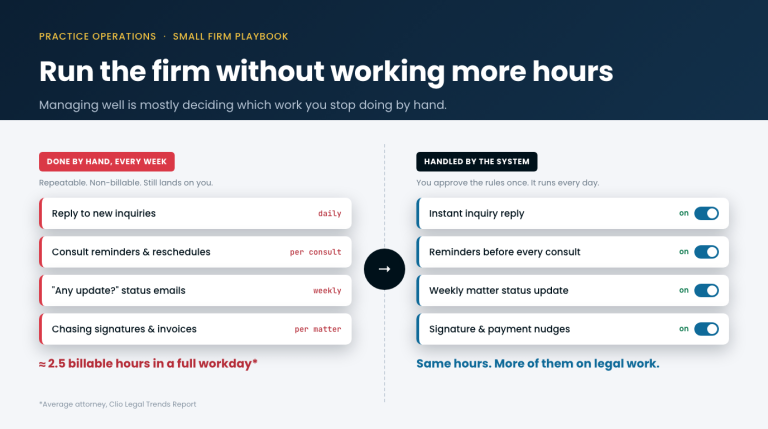
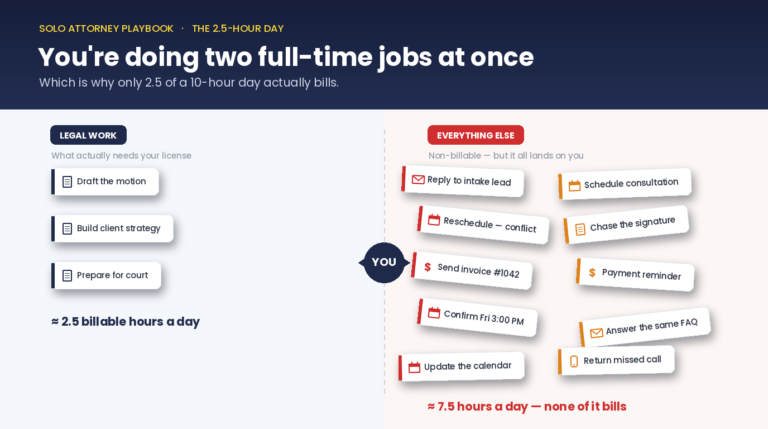
Most follow-ups run on memory. A lead comes in. You reply. They say they’ll think about it. You plan to follow up next week. You don’t. Not because you forgot. Because ten other things showed up first. By the time you remember, they’ve hired someone else.
Same pattern with past clients. A matter closes. You move to the next case. No follow-up. No check-in. The relationship quietly ends. These aren’t edge cases. This is the default system.
Visibility is the real problem. Mental notes break once you’re tracking more than a handful of clients. Calendar reminders get ignored. Email flags disappear once your inbox crosses 30–40 messages. The same blind spot applies to dates you have not written down yet — a deadline calculator at least puts them on paper the moment a trigger date is known.
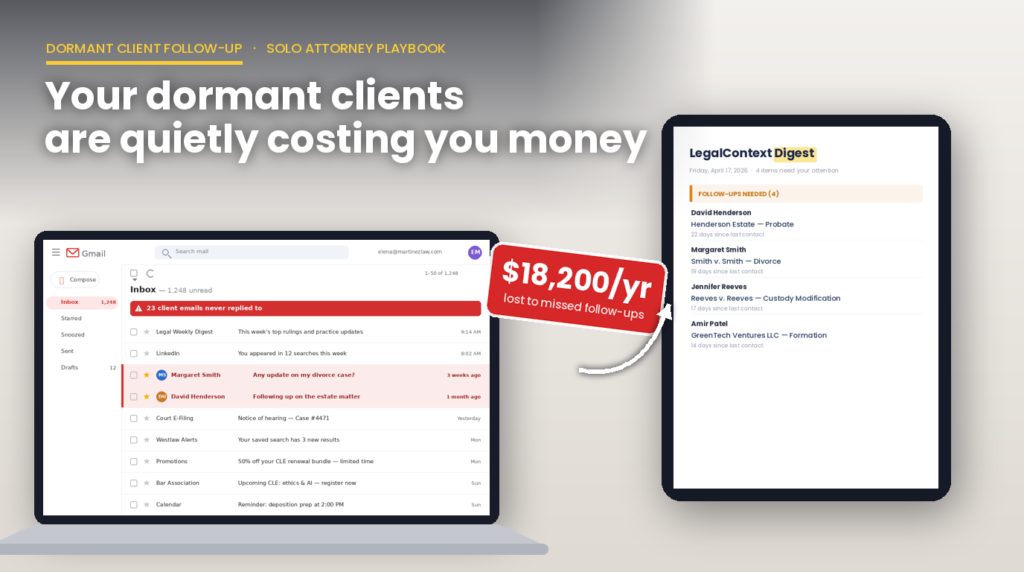
The “Invisible Client” Problem (Gmail Example)
- Maria Nguyen: Following up… (2 weeks ago) ← INVISIBLE
- David Kim: Referred by Tom — need help (3 weeks ago) ← INVISIBLE
- Thomas Brennan: Checking in — is there an update? (Last month) ← INVISIBLE
Note: These are real opportunities. None are flagged. All appear identical to low-priority messages.
What Happens When Follow-Up Is Missing
The damage from avoiding dormant client follow up builds quietly:
- Leads go cold: A prospect who doesn’t hear from you within 7 days often hires someone else.
- Past clients don’t return: If you don’t stay in touch, they assume the relationship ended with the last invoice.
New work never reaches you: You’re not in the conversation when a new problem arises.
The Annual Revenue Leak
| Metric | Estimate |
| Leads that would have converted with follow-up | 2 per month |
| Average matter value | $3,000 |
| Revenue missed this year (Leads) | $72,000 |
| Estimated return rate of past clients with check-in | 3 per year |
| Revenue missed (Past clients) | $7,500 |
| TOTAL ESTIMATED ANNUAL REVENUE LEAK | $79,500 |
What a Real Follow-Up System Looks Like
A professional follow-up system ensures no client or lead goes quiet without being flagged.
| Category | Timing Rule | Trigger |
| Active Leads | No response after 7 days | Alert fires |
| Unconverted | Quiet at 14 days and 30 days | Two reminders |
| Completed | 30 days and 90 days post-close | Check-in prompt |
| Inactive Clients | No contact in 60 days | Re-engagement flag |
How Follow-Up Alerts Actually Work
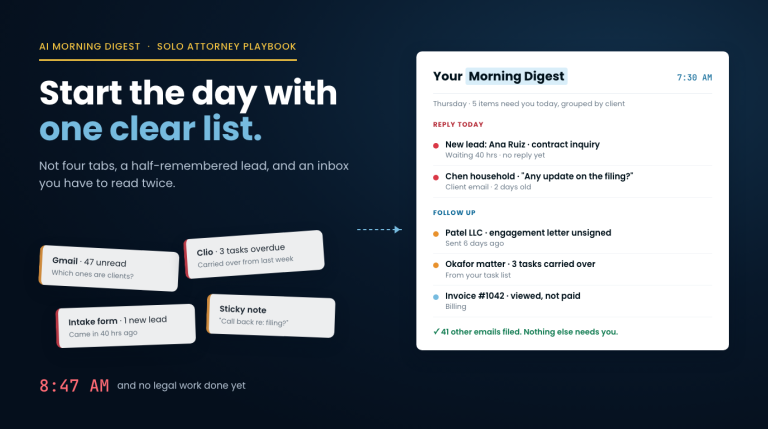
In LegalContext, you start the day with a “Morning View” list—not a reconstruction of who you need to remember.
- Lead Flow: 7 days pass with no response → Alert fires → Attorney sends follow-up.
- Closed Matter Flow: 30 days pass → Alert fires → Attorney sends brief check-in.
Dormant Flow: 90 days of silence → Alert fires → Attorney re-engages.
Before vs. After the System
| BEFORE THE SYSTEM | AFTER THE SYSTEM |
| Follow-ups run on memory | Follow-ups run on a list |
| Mental notes break under load | System tracks automatically |
| Leads go cold without notice | Alerts fire at 7, 14, 30 days |
| Past clients silently leave | Dormant clients surface daily |
| Effort goes to loudest tasks | Effort goes to highest-value work |
Practical Steps for Dormant Client Follow Up
- List Your Client Types: Active leads, Unconverted leads, Closed matters, Inactive past clients.
- Set Your Timing Rules: Leads (7 days), Unconverted (14/30 days), Closed (30/90 days).
- Change Your Mindset: Mark every closed matter as the “start of follow-up.”
Run Your Audit: Pull the last 6 months of leads. Count how many received zero follow-up. That is your baseline.
Stop Losing Clients You Already Earned
Missed follow-ups aren’t a discipline problem. They’re a systems problem. If nothing is tracking inactivity, clients will go quiet without you noticing.
LegalContext fixes this by tracking everything in one place. Right now, there are clients in your practice who are invisible to you. They’re just waiting for a message that hasn’t come.
Start a free trial and see exactly who you’re missing — before they hire someone else.