You Know AI Is Changing Legal Practice. You’re Not Sure How to Use It Without Getting Burned.
You tried ChatGPT on a research memo six months ago. It was fast. You used it again. Then a colleague mentioned liability risks and you pulled back. Now you use it occasionally, carefully, with no clear rule for when it’s appropriate and when it isn’t.
That is the position most New Hampshire solo attorneys AI users find themselves in right now. Not opposed to the technology. Not committed to it. Running on instinct in a space that requires structure.
The cost of that position is real. Firms with systems are responding to leads in minutes. Firms without them are responding the next morning — after the prospect has already signed with someone else. The gap between those two outcomes isn’t AI. It’s operations.
This article covers where NH solo attorneys are actually landing on AI, why the hesitation makes sense, what the guidance is missing, and what separates firms that are gaining ground from those that aren’t.
How NH Solo Attorneys Are Actually Using AI
The most common use cases are research and drafting. An attorney runs a quick case law summary. Another generates a first draft of a demand letter. A few are testing litigation tools that flag procedural issues or summarise discovery. The tools work well enough to keep using.
What’s missing is any consistent structure around that use.
There’s no defined process for when AI gets used, how outputs are verified, or how work moves forward after the tool produces something. One attorney uses it daily. Another uses it once a month. Neither has a written policy. That’s not adoption. That’s improvisation.
The NHBA and its AI Task Force have been clear on the obligations. Rule 1.1 requires competency — understanding how a tool handles data, where it fails, and what your liability is when it does. Rule 1.6 requires active confidentiality protection. Entering client details into a tool that trains on user inputs is a potential violation whether you intended it or not.
Most NH solo attorneys know these rules exist. Far fewer have built any structure around them.
The result is a practice where AI gets used when convenient and avoided when uncertain — with no intake workflow tied to it, no follow-up system running from it, and no documentation of how outputs are reviewed. Every day that continues, prospects who contacted the firm are hiring someone else before getting a response.
Why the Hesitation Is Rational — and Why It Still Has a Cost
The caution among New Hampshire solo attorneys AI users isn’t ignorance. It’s a reasonable read of real risk.
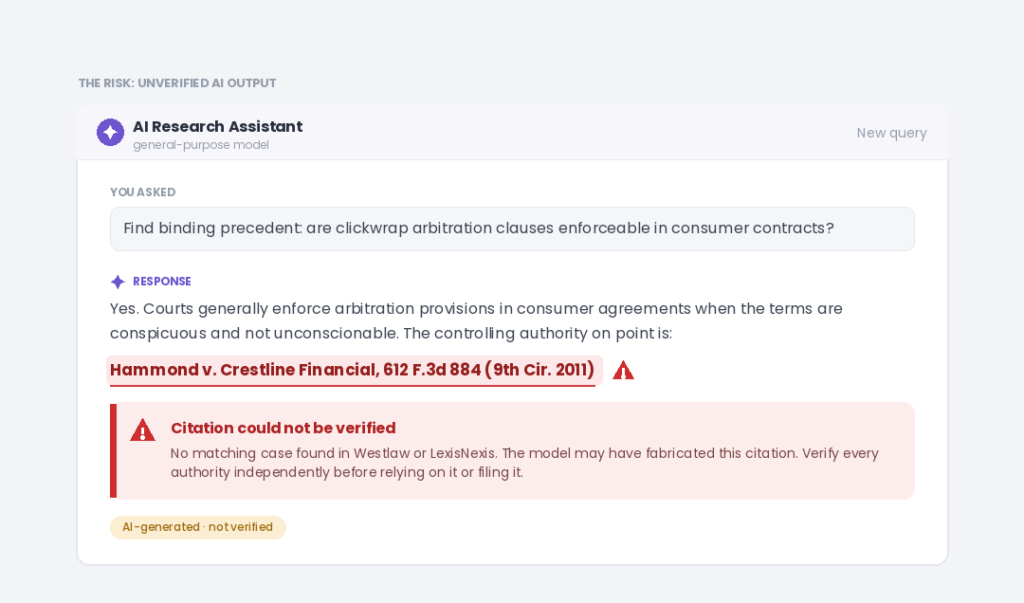
Hallucinations are the clearest danger. The Mata v. Avianca case showed exactly what happens when an attorney relies on AI output without verification — fabricated citations filed in federal court, sanctions, and a public record that doesn’t go away. One unverified output in a brief, a contract, or a legal memo can trigger a bar complaint, end a client relationship, and create the kind of reputational damage that takes years to repair.
Bias runs quieter. AI tools trained on historical legal data reflect historical patterns — in sentencing, in judicial decisions, in outcomes. In family law, employment, housing, or criminal defence, a biased output that goes unchecked isn’t just an ethical problem. It’s bad advice that harms the client and exposes the attorney to a malpractice claim.
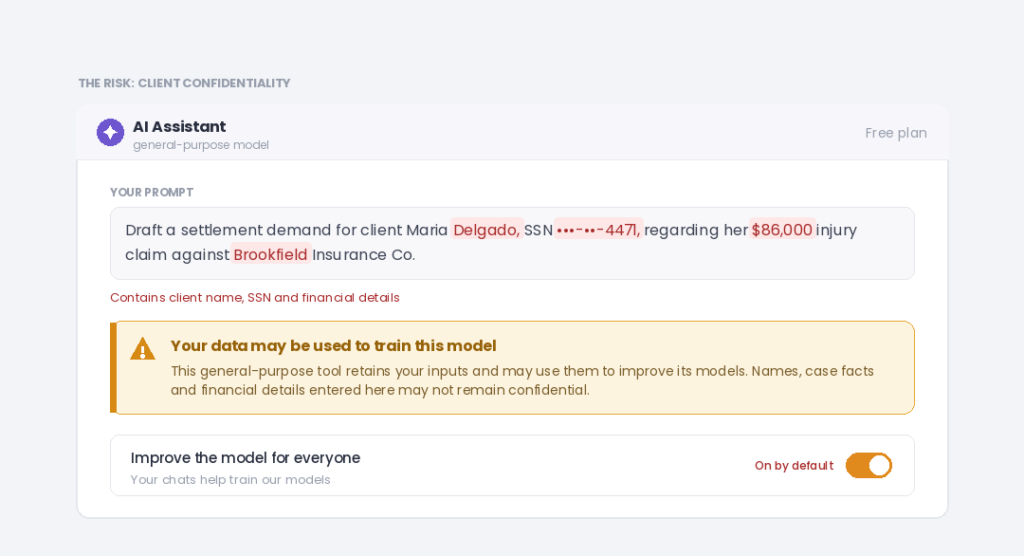
Confidentiality is the most immediate operational risk. Consumer-grade AI tools frequently retain user inputs or use them for training. A prompt containing client names, matter details, or financial information may not be protected under any standard the attorney would recognise.
The attorneys who are hesitant are reading the situation correctly. But hesitation without a framework is avoidance. And avoidance has its own cost: losing clients to firms that have figured out how to operate within the rules while moving faster.
The Real Problem Is the Missing Layer
The NHBA guidance is clear at the policy level. Understand the tools. Verify the outputs. Protect confidentiality. Supervise AI use. These are the right obligations.
What the guidance doesn’t address is how a New Hampshire solo attorney actually builds a practice around them.
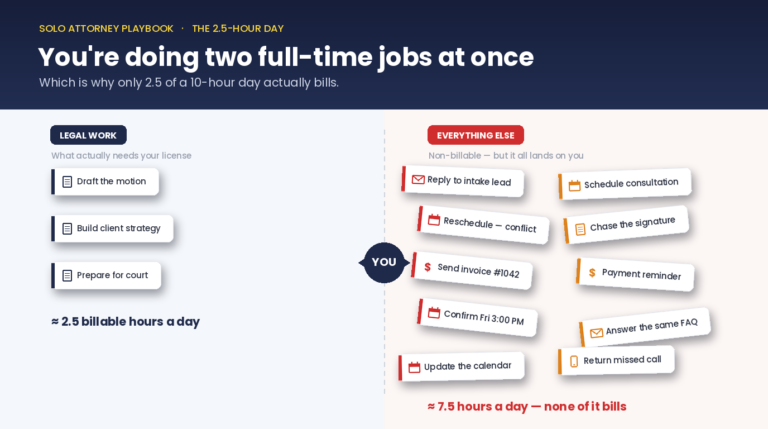
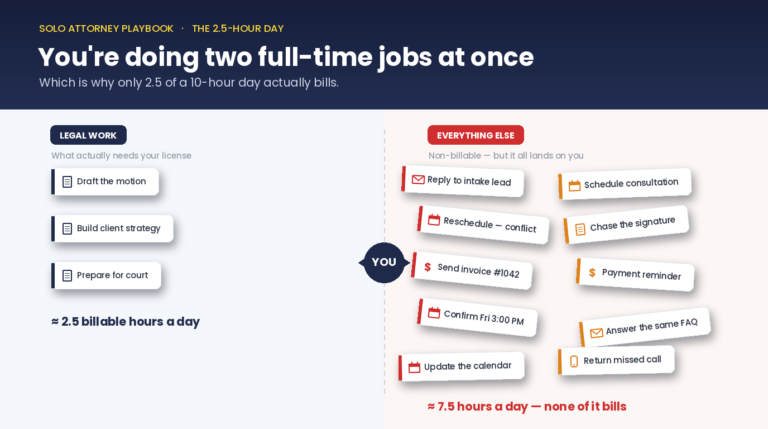
There’s no template for an intake system that responds to leads while you’re in a four-hour hearing. No framework for a follow-up sequence that runs when your caseload is at capacity. No structure for getting a retainer out the same day a client verbally commits.
Those are operational gaps. The guidance handles compliance. It doesn’t handle the lost-client problem.
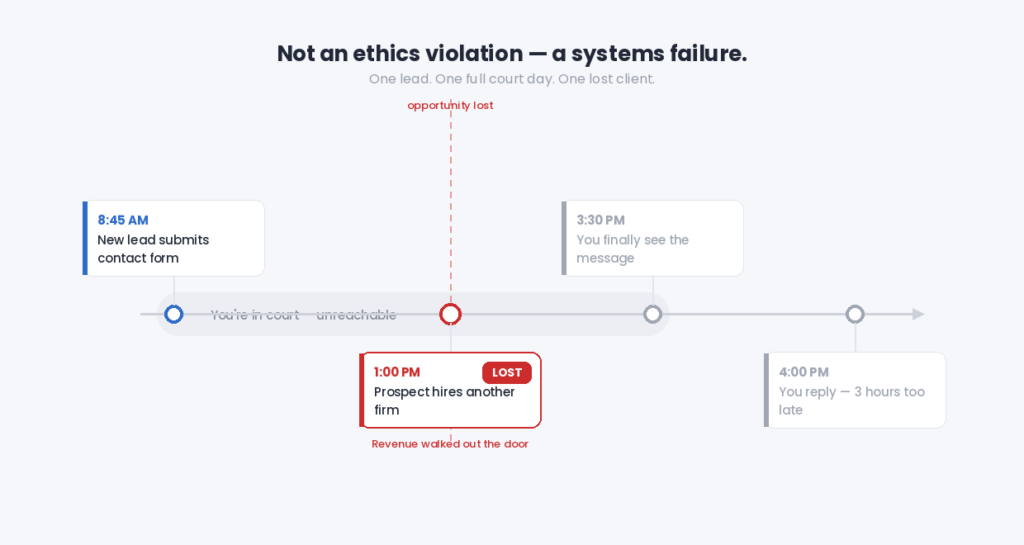
Here’s what the gap looks like in practice. A lead submits a contact form at 8:45 AM. You’re in court. You see the message at 3:30 PM and respond by 4. The prospect hired another firm at 1. That’s not an ethics violation. It’s a systems failure — and it cost you a client and the revenue attached to them.
The same pattern runs through follow-up. A prospect consults with you but doesn’t sign the retainer. You plan to follow up Thursday. Thursday is a full day. You follow up Friday. They’ve moved on.
No AI tool caused that outcome. The absence of an automated sequence did.
Tools don’t fix this. A solo attorney with five AI tools and no connected workflow is still running on memory and manual effort. The missing layer isn’t a better tool. It’s the system that makes tools run consistently without the attorney managing every step.
What Actually Works
The attorneys gaining ground aren’t using better AI. They’re running defined systems. The difference shows up in three places.
Intake and first response. A lead submits a form. The system sends a response within two minutes — a message the attorney has approved, asking the questions the attorney needs answered before the first call.
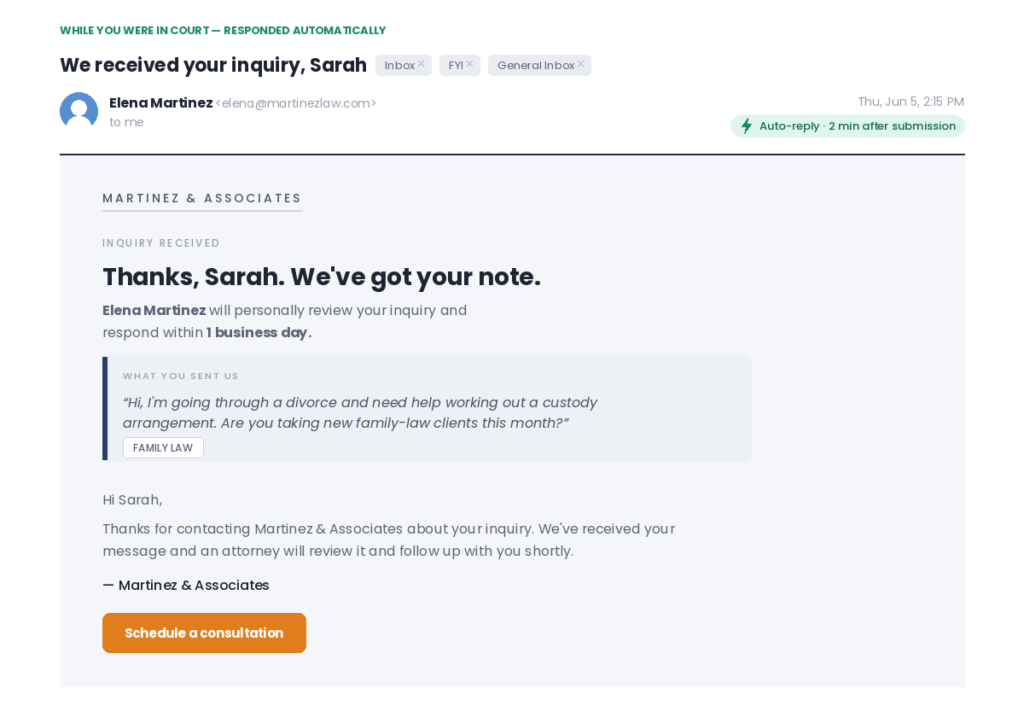
Without this, the lead waits until the attorney is available. On a full court day, that’s six hours. Most prospects don’t wait six hours.
Follow-up automation. A prospect misses a consultation. The system sends a rescheduling message within the hour. A retainer hasn’t been signed after 24 hours — the system follows up.
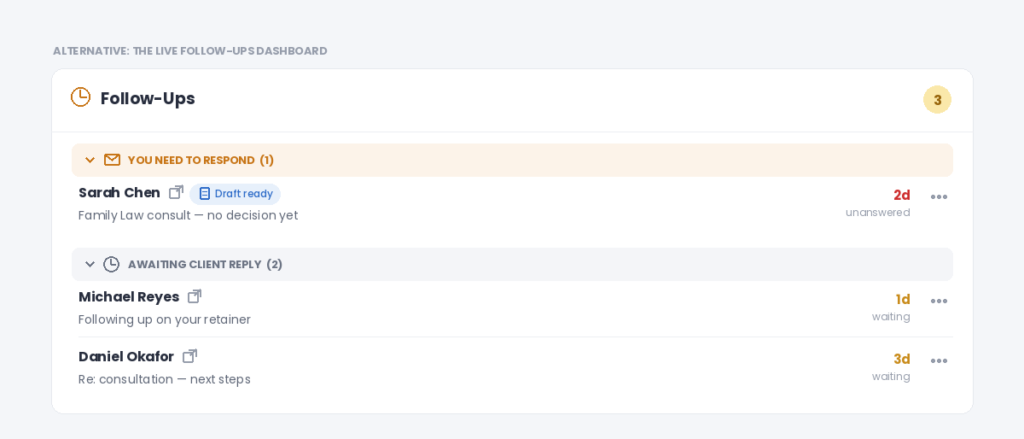
Without this, follow-up depends on whether the attorney remembers. Under a full caseload, many don’t. Those leads go cold.
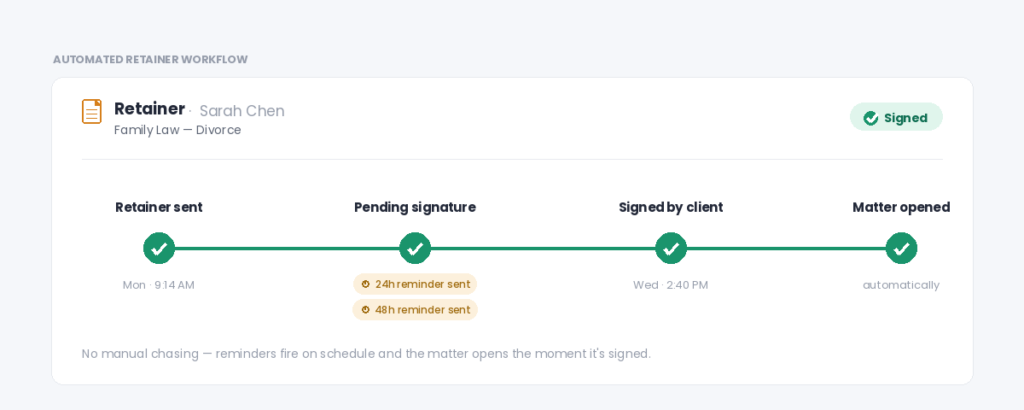
Document workflows. A client says yes. The retainer goes out the same day. The system follows up at 24 and 48 hours if it hasn’t been signed. When it is, the matter opens automatically.
Where LegalContext Fits
LegalContext is not a research tool or a drafting assistant. It’s the operational layer that closes the gaps described above.
When a lead comes in, it responds immediately — with a message the attorney has approved. When a prospect goes quiet, it follows up on schedule. When a client says yes, the retainer goes out without the attorney having to remember to send it.
The manual steps that create delays and dropped leads are removed from the equation.
For New Hampshire solo attorneys AI compliance structures matter. LegalContext doesn’t generate legal advice. It doesn’t produce unverified content.
It handles the administrative communication and solo attorney admin workload that consumes attorney time without requiring attorney judgment — and does it without the attorney managing any of it manually.
The outcome is straightforward. Faster responses. No missed follow-ups. No leads going cold because the attorney was in court. The practice runs whether the attorney is available or not.
Operating Without a System Is a Decision. It Has a Cost.
New Hampshire solo attorneys who are cautious about AI are asking the right questions. The ethical obligations are real, and the risks of unstructured use are not theoretical.
But caution without a system is still a problem. It means slower responses, inconsistent follow-up, and clients going to firms that have built the infrastructure to move faster within the same rules.
The attorneys who will be ahead in 2027 are not the ones who figured out AI first. They’re the ones who built systems that run consistently — during hearings, across a full caseload, without depending on memory or manual effort.
Every week without that structure is another week of clients that contact your firm and sign with someone else.
Final Thought
AI isn’t the decision. Systems are.
If you don’t know where your practice is losing clients, there’s a structural gap worth looking at.